
What if the donors you seek are already here?
If you run a nonprofit or a mission-based for-profit organization, it's worth thinking about who might already have loyalty to you when you're looking for new donors.
Read More
September 9, 2026
Report


Over the past month, we exhibited at several conferences. Most recently, I was at the AFP Advancement Northwest conference in Bellevue. That’s me in the photo above.
I consistently attend marketing conferences. There’s still a lot to learn. Earlier this year, I attended Unspam in Baltimore, followed by Email Innovations World in Phoenix. I also have a ticket to October’s “SparkTogether,” a marketing event focused on audience research and development.
I’m new to exhibitor culture, however. Over nine years at the agency, we never exhibited anywhere. But the event in Bellevue was already our third event this year.
It’s an odd thing to sit quietly at an exhibitor’s table and smile at people as they walk by. I rarely chat with exhibitors when I’m at a conference myself, so I understand when people keep walking, eyes straight ahead.
Eventually, inevitably, someone will approach my table, stare at the backdrop, tilt their head toward me (nose scrunched), and ask a question.
I write these questions down in my notebook.
"What do you mean by donor journey? Is that basically a buyer’s journey?"
(Yes, I think that’s a good analogy to start with.)
"What’s your fee structure? How do you get started?"
(We like to start with a diagnosis, build a roadmap for multiple quarters, then bill a flat rate project-by-project as we work through the roadmap. Sometimes I offer coaching by the hour, too. Small orgs have found that useful over the years.)
"So wait, who’s Clyde?"
(That’s when I show them the cover photo on my iPhone. "He was busy today. Lots to do," I say. They always laugh.)

Exhibiting at these conferences have given me a chance to talk with a lot of interesting, passionate people. I’ve learned a lot from them. It’s been a positive experience.
I’m starting to see patterns among organizational needs. There are similarities to the private sector.
The big organizations can already handle all the development, communications, and marketing functions. When they need outside helps, it's because they have a very specific need for a very specific expertise to help them solve a particular problem. (It’s often a technical riddle, like connecting data sets and platforms.)
The smallest organizations need everything and more. Focusing on core needs is probably a great place to start. For instance:
And then there’s everyone in the middle. Here, there’s usually already an infrastructure in place, a history of investing in both development and communications, and likely an understanding of the value of marketing automation and segmentation in communications with prospects and donors. Yet, they may or may not have the specific skills, experience, or right amount of resources to harness growth.
Over the years, we've worked across all three groups, but mostly right here in the middle. We're often the fuel that feeds sustainable growth.
I hope to exhibit again in October at the Nonprofit Impact Conference in Portland. I’ve sent them a note asking if there’s still an available spot.
Until then, a bit like Lucy from Peanuts who gives advice for five cents, regardless of your organization’s size and needs, I’ll be over here if you need me.
How's your summer going?
We'd love to hear what you're up to (hit reply to let us know). Here's how we've been spending our recent 'Out of Office' time.

Lili (UX Design & Data Operations): "I went home to Peru to visit family. While I was there I spent a week at a beach resort in the town of Punta Sal in the northern state of Tumbes, which is almost to the border of Peru and Ecuador. I SAW BEACH FOXES EVERYWHERE!"

Brian (Senior Visual Designer): "I just got back from visiting some lucky in-laws who live near the Malvern Hills in England. Beautiful heights layered in forests, meadows, and history, criss-crossed by countless hiking trails that all seem to end at a pub. What more could you want?" (Aside from a way to make your warm English beer cold.)
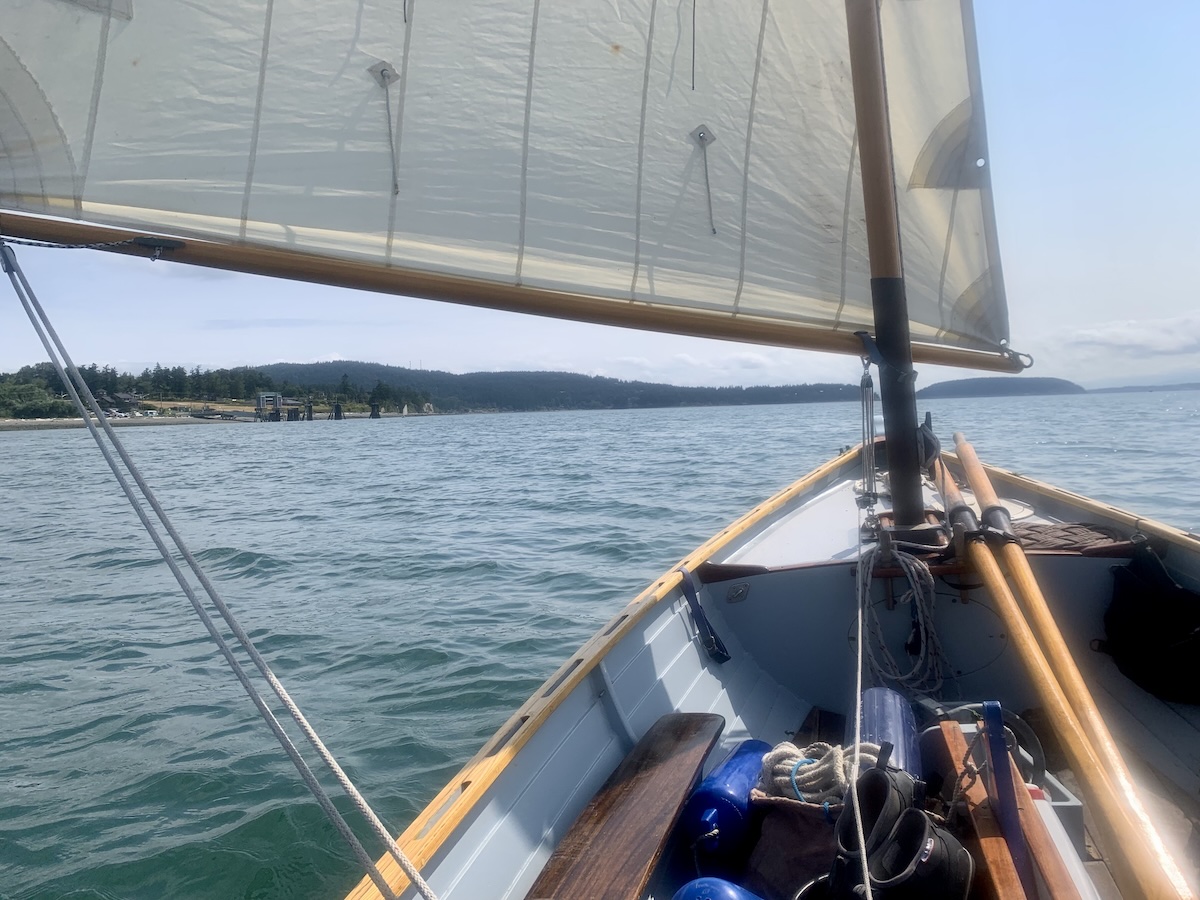
Tim (Donor Journey Strategist): "At the end of June, I went cruising around the San Juan Islands for five nights. I took my wooden boat, Haverchuck, which is an 18-foot sail-and-oar boat. There’s no motor in this little beach cruiser, you just have to figure out how to get where you want to go using the wind, the current, and your oars. At night, you set up a tent and camp out on the boat."
MXGolden is a service offering of Clyde Golden, the member retention marketing agency for nonprofits and mission-based organizations.
Anacortes, WA

