Your Questions, Answered: The 'Effective Surveys' Edition
Automated or one time surveys? Surveys or interviews? Email or text? Answers to the best questions from our webinar with Jessica Knapp, PhD.
Read More
November 20, 2026


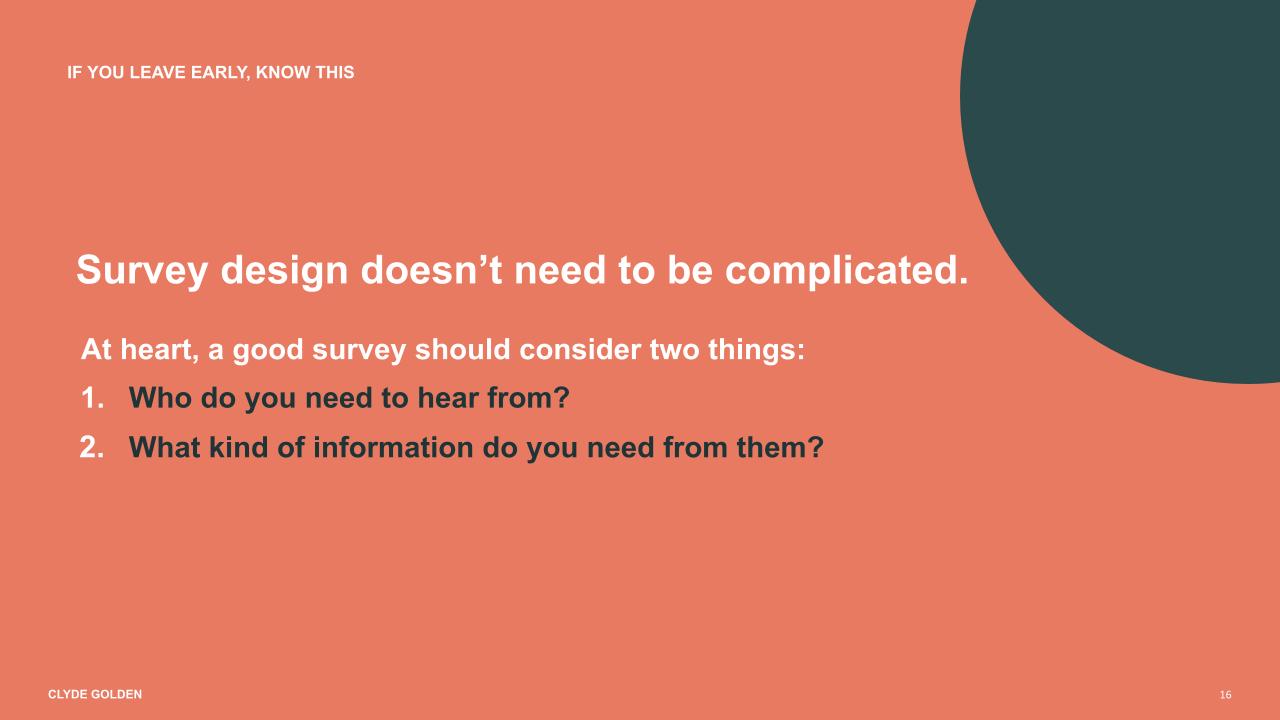
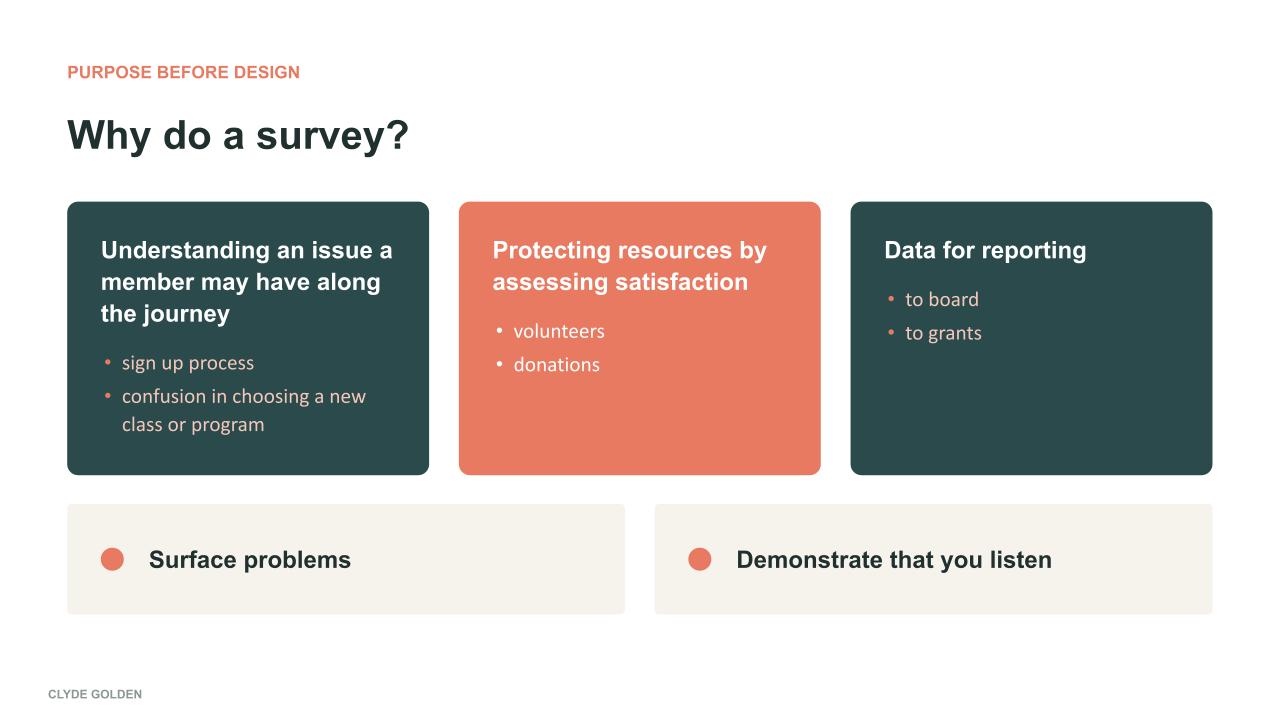
A good survey starts with two questions: who do you need to hear from, and what do you need to know from them?
We invited Jessica Knapp, PhD, a communication and research strategist who has designed surveys for Livestrong Foundation and Kaiser Permanente, to show nonprofit leaders how to build surveys members actually answer. She covers when to send a survey, who responds and who doesn't, and how to turn results into change. Tim Yeadon and Matt Clifton of Clyde Golden join her for a conversation and live Q&A.
Check out the Webinar Q&A Recap: Your Questions, Answered
1. Start with two questions: who, and what
What's happening: Surveys feel big. They involve data, lots of people and a lot of pressure, so teams reach for whatever survey they sent last year or copy what another organization did. The result is long, unfocused questionnaires that don't answer anything specific.
What to do about it: Before you write a single question, settle two things: who you want to hear from, and what you need to know from them. Jessica's advice was simple: a good survey doesn't need to be complicated. A monthly newsletter writer asking readers what they valued and what to change can learn more than a long annual questionnaire.
2. Survey at the moments that matter
What's happening: Most surveys go out on a calendar, not at a moment in the member journey. That misses the times when members have the most to tell you and you have the most to fix.
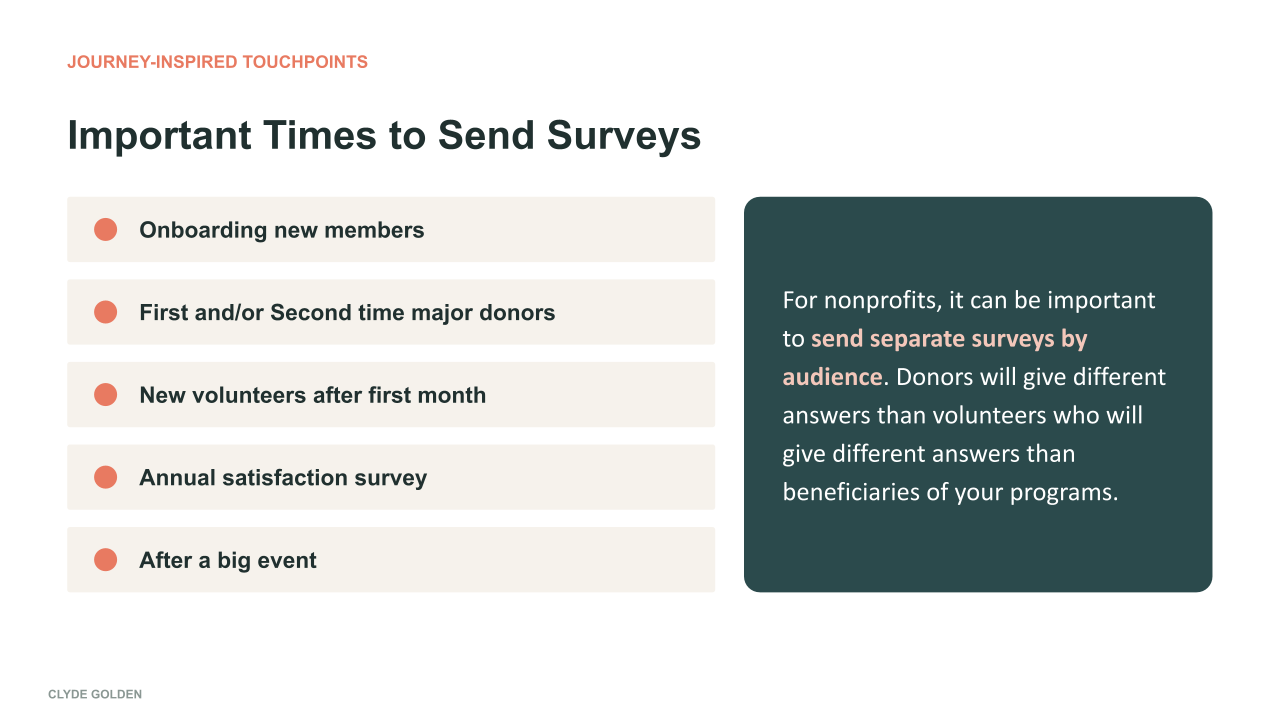
What to do about it: Build surveys around five moments: a new member's first weeks, a first gift, a first volunteer shift, an annual satisfaction check, and right after a big event. The first weeks matter most; that's when a new member goes from trying you out to being truly invested. Post event surveys catch people at their warmest, which makes them a good source of quotes and numbers for grant reports. Automate the ones tied to a behavior, like joining, so they go out without anyone having to remember.
3. Ask each group its own questions
What's happening: Nonprofits often send one survey to everyone. But donors, volunteers and the people your programs serve see your organization from different places.
What to do about it: You can survey every group at the same time, but give each group its own questions. A donor can tell you about stewardship; a volunteer can tell you how a shift went; a program participant can tell you whether the program worked. Mixing them blurs all three answers.
4. Plan the back end before you hit send
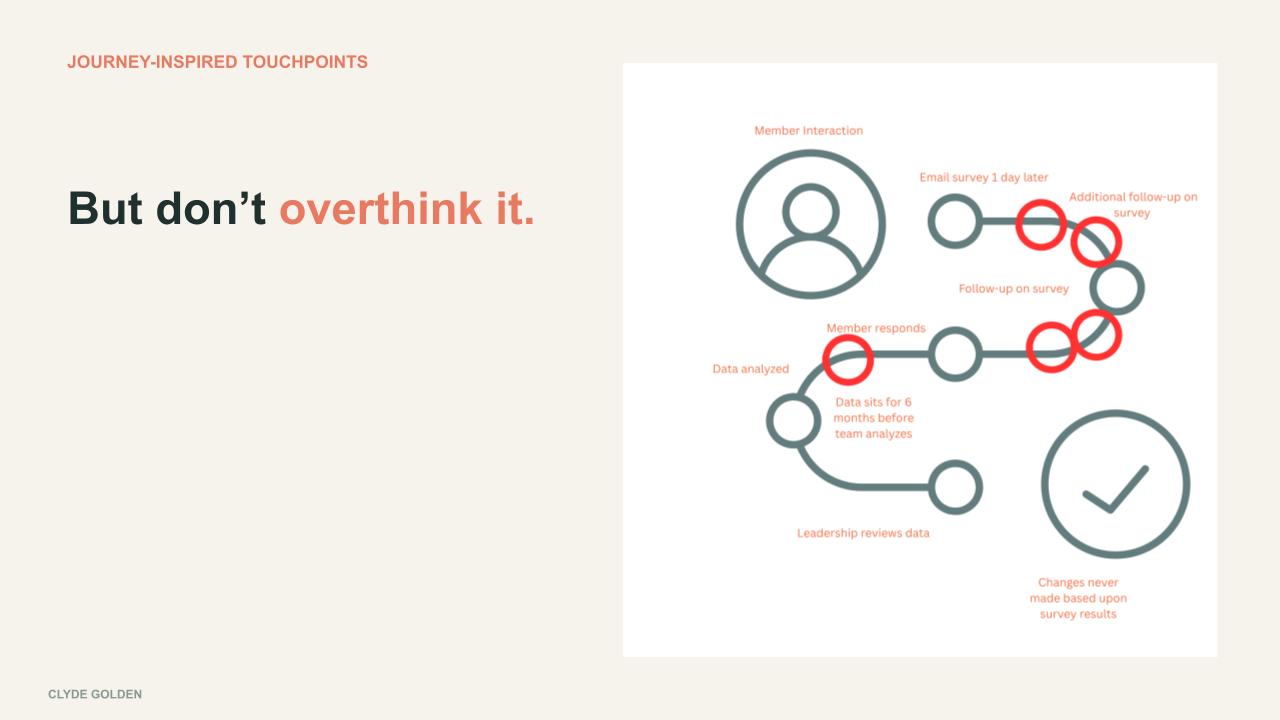
What's happening: Survey data often sits for six months or more. Leadership reviews it, and nothing changes. Meanwhile, a serious issue can hide in the open ended answers.
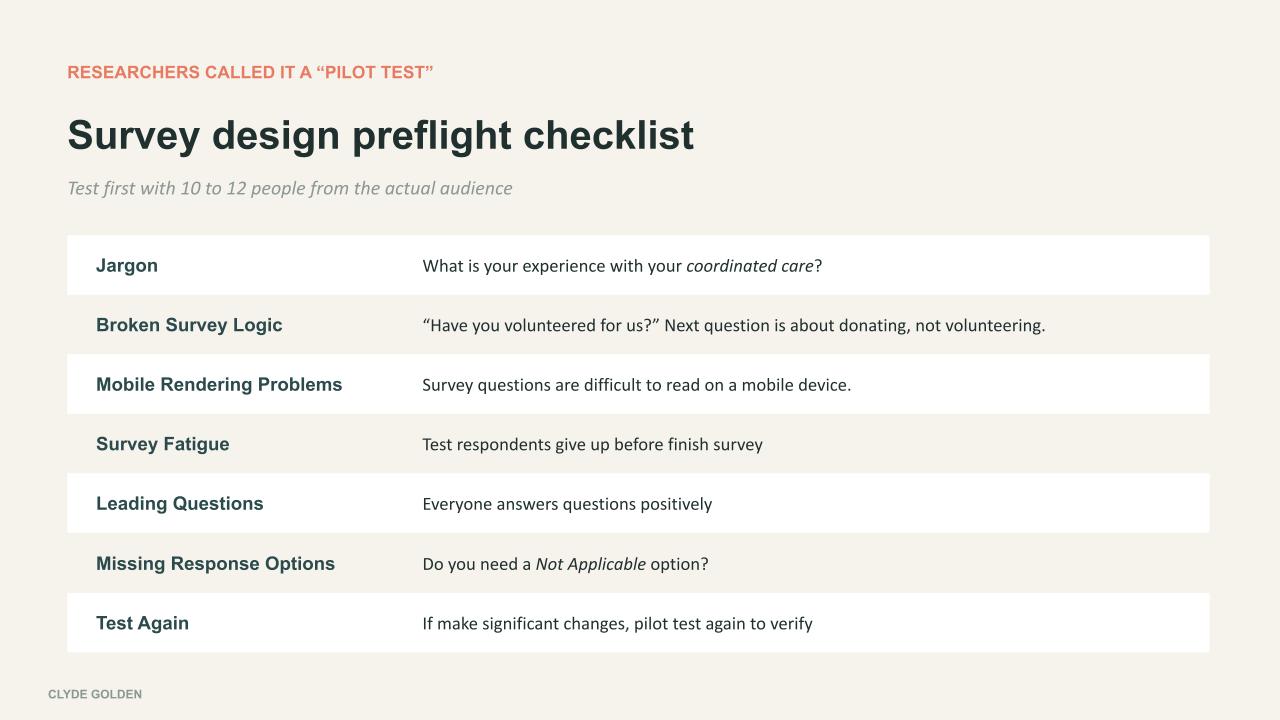
What to do about it: Before you send, decide who will analyze the results, when, and how changes will get made. Have someone who knows your organization well at least skim every response. Then test the survey on 10 to 12 people from the same audience before it goes out. Watch for jargon, broken logic, questions that are hard to read on a phone, leading questions and missing answer options. If you make significant changes, test again.
5. One or two reminders is plenty
What's happening: When response rates come in low, teams panic and send reminder after reminder.
What to do about it: Stop at one or two follow ups. Responses tail off after that, and every extra email teaches people that your name in their inbox means another ask. Protect the relationship over the response rate.
6. The people you most need to hear from won't answer
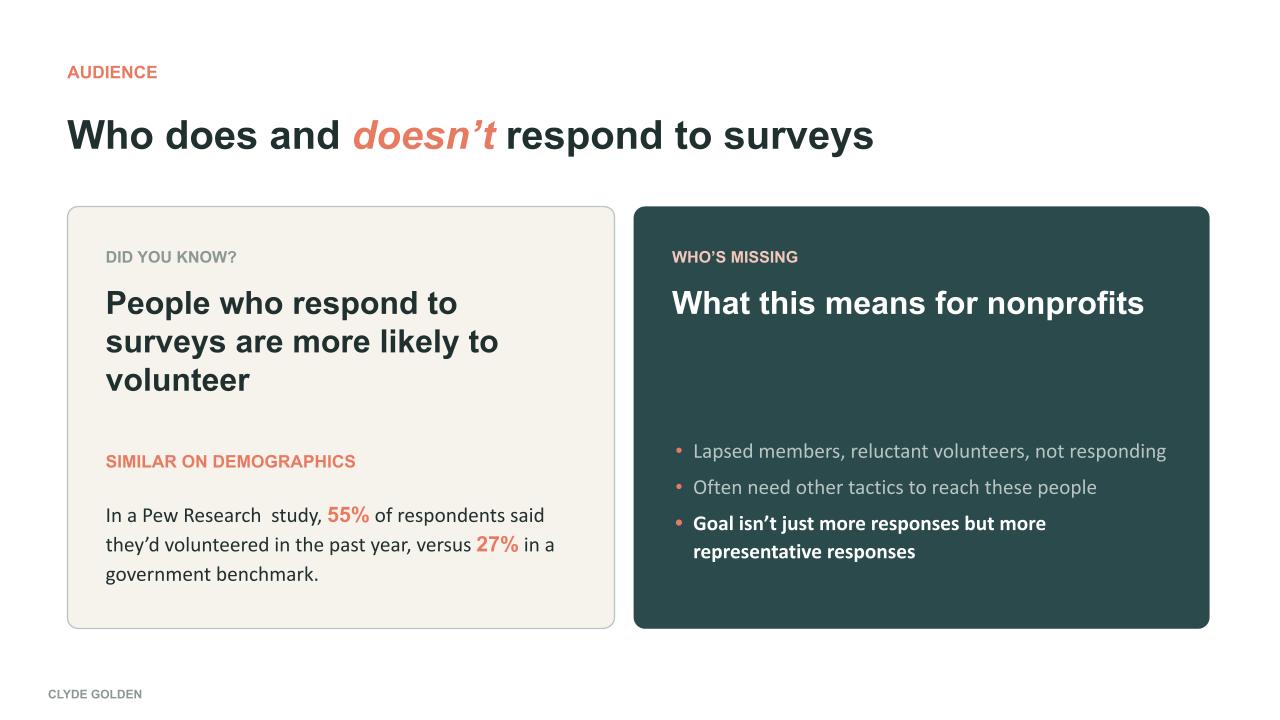
What's happening: Research Jessica shared from Pew found that people who answer surveys look much like those who don't, demographically. The difference is behavior: in one Pew study, 55% of respondents said they had volunteered in the past year, compared with 27% in a government benchmark. Because nonprofit audiences tend to be community minded, response rates are often better than in the for profit world. But the members you most need to hear from, lapsed members and reluctant volunteers, are exactly the ones a survey won't reach.
What to do about it: Don't send another survey or rewrite the subject line. Reach them another way: a phone call, a personal note, an invitation to an event, or a short interview. As Jessica put it, the goal isn't just more responses, but more representative ones.
7. Pair the number with the story
What's happening: Boards and grant funders want proof. Numbers deliver it quickly, but numbers alone rarely move people.
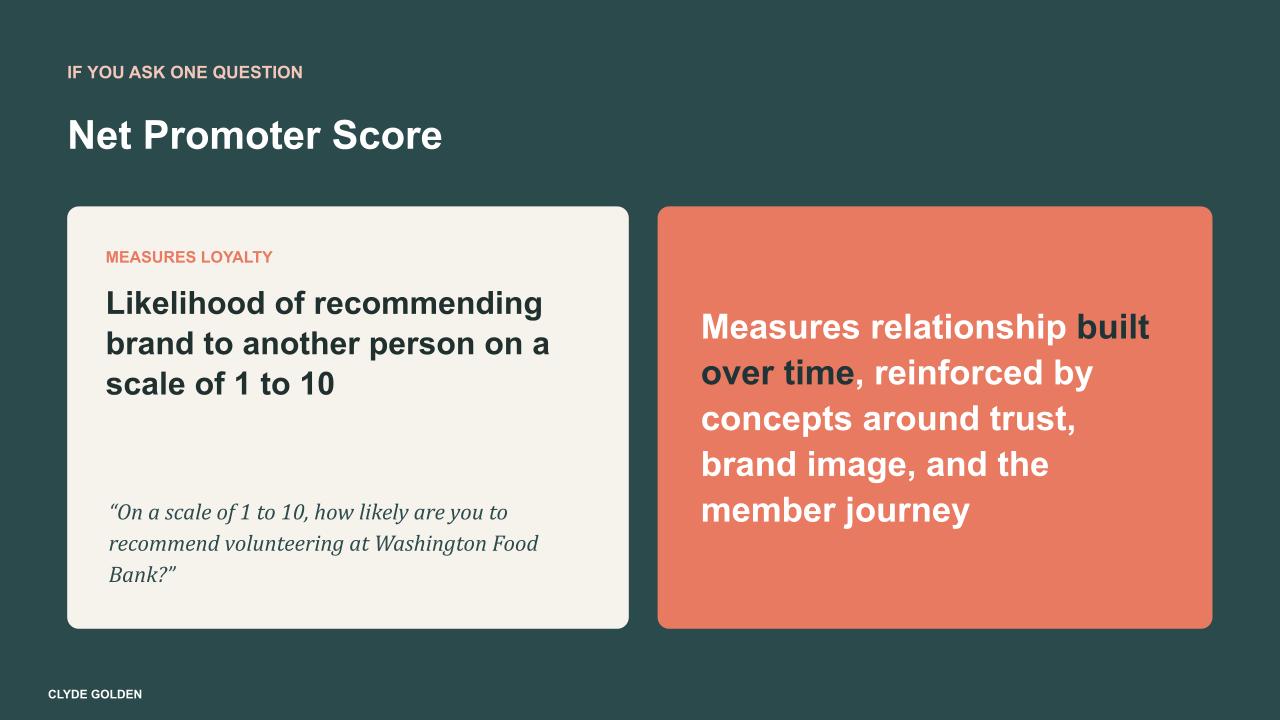
What to do about it: If you can ask only one question, ask Net Promoter Score: how likely are you to recommend us, on a scale of 0 to 10. Scores of 0 to 6 are detractors, 7 and 8 are passives, and 9 and 10 are promoters; most of your work goes into moving passives up. Then add open ended questions for the story. In Jessica's work with Livestrong Foundation, the numbers made the case, but the idea from a focus group that young men felt they had to be Superman through their cancer is what the board kept repeating when it decided to fund more research.
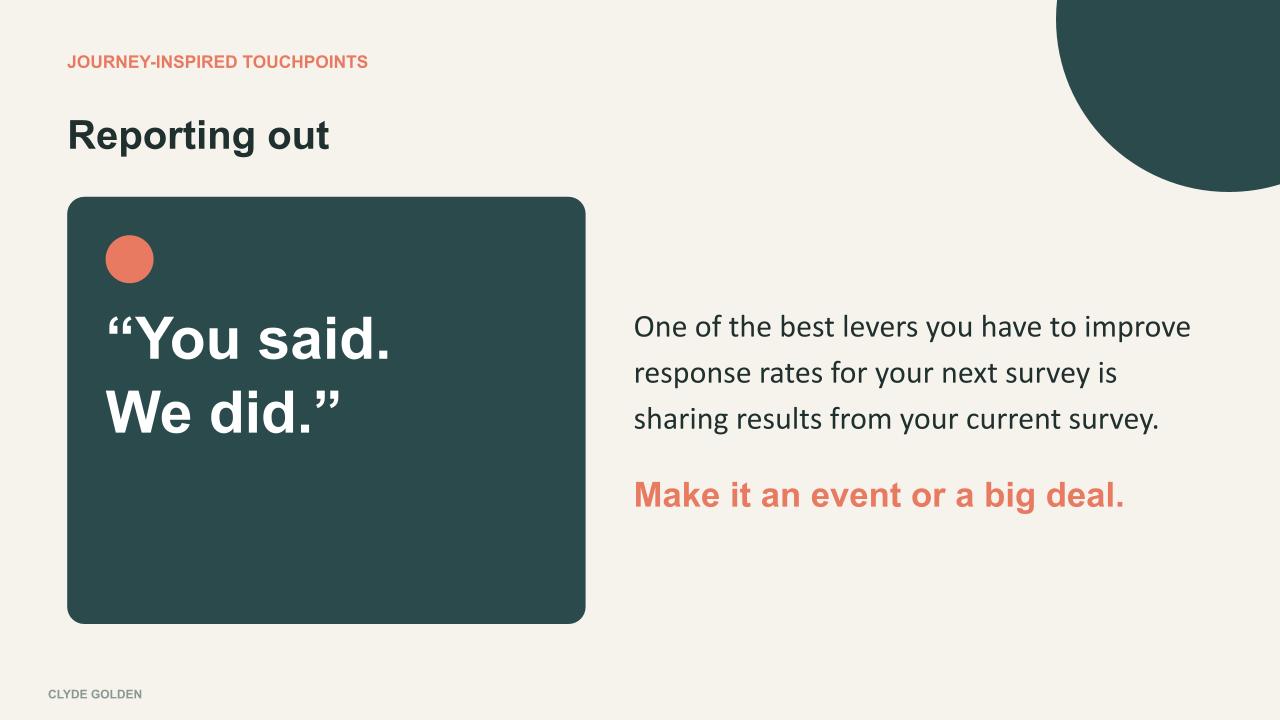
8. Close the loop: "You said. We did."
What's happening: Many organizations skip the step after the survey: telling people what happened because of their answers.
What to do about it: Report back, even when the change is small. Jessica's example: volunteers said they never wore the event t-shirts and would rather have a baseball cap, so the organization switched to caps and told them. Showing people they were heard is the strongest reason they'll answer your next survey, and it builds trust with everyone you serve.
Jessica Knapp, PhD
Communication and research strategist based in Port Orchard, Washington. Jessica has designed and analyzed surveys for nonprofits including Livestrong Foundation and Kaiser Permanente, using research to measure member satisfaction and win grant funding.
See Jessica's LinkedIn profile.
Tim Yeadon
Founder of Clyde Golden, the member retention agency for nonprofits. Tim helps membership teams spot the drift early and keep their best members engaged.
About Tim
Matt Clifton
Data & Software Strategist at Clyde Golden. Matt connects CRMs and email platforms so the behavior in your systems turns into timely, relevant messages.
About Matt
MXGolden is a service offering of Clyde Golden, the member retention marketing agency for nonprofits and mission-based organizations.
Anacortes, WA