
What if the donors you seek are already here?
If you run a nonprofit or a mission-based for-profit organization, it's worth thinking about who might already have loyalty to you when you're looking for new donors.
Read More
September 9, 2026
Report

People aren’t loyal to you because you did something for them. If someone is loyal, it’s because they did something for you.
They took a chance on you. And if it turned out well and you were grateful, it probably felt satisfying to them. And so, odds are they'd help you again. That's the seed of loyalty.
If you run a non-profit or a mission-based for-profit organization, it's worth thinking about who might already have loyalty to you when you're looking for new donors.
You know who fits this definition? The people you already serve.
In most situations, it's not that tough of a call. You're probably already doing it.
For instance, youth sailing? Outdoor camps? Adult literacy programs? Send the parents a thank-you note and save the date for next year, and ask if they can help children from low-income families participate next time too.
This past spring, I spoke to a development officer at a small YMCA in Latin America. She had around 20 major donors. Most were professionals or members of wealthy families. She was about to start a capital campaign for a new facility.
But she had hundreds of kids who were part of her programs. And those kids likely have a parent, and those parents have jobs. All those people have a connection to her YMCA's mission.
When you start to sketch it out, her community is actually quite large. Will these families give enough to build the new facility? Highly unlikely. But they will provide important social proof that the programs are effective and should be continued.
To me, the important distinction is not wealth, it's their connection to you.
But what if it's a grief counseling program for widows? Or a homeless shelter? Or you're working with people with addictions, refugees new to our country who need business start-up advice, or survivors of domestic violence?
Would you or would you not make an ask? Even if you serve people in difficult circumstances, they might still have ways to contribute or offer support.
Over the past year, I've actually had conversations with leaders who serve each of these specific groups. It's a sensitive subject. The topic consistently comes up when we're talking about audience segmentation.
Opinions are often split. (Interestingly, founders often say, "yeah, let's ask," and teams say, "let's slow down and think this through.")
A lot of fundraisers may be leery. They don't want to put added pressure on those they serve. Asking can feel presumptuous, especially with someone who came to you at a low point.
But the reverse is also true. If you never ask, you're deciding on someone else's behalf that they have nothing to offer you, and that they wouldn't want the chance to give back. That's its own kind of presumption. Most people who've had a good experience with an organization want a way to show it. I think it's their choice to make, not ours.
Go take a look at your active and lapsed donor pools. Did you record how they came to know your organization? Did they attend a program or take part in your services? What percent is that?
They're in there, aren't they? They didn't have to come to you, or return again and again. There may have been other options. Or they could have just continued along their path, perhaps alone, perhaps in a much worse condition. I'm glad they have you.
My advice is always the same. I always suggest offering clients a path to show their support. Support doesn't have to be money, though it could be. It could be time, or a testimonial.
How would you know if your clients are ready?
There's probably a time to make an ask somewhere in your client's journey with your organization. I doubt it's on day one. It probably comes after your services have gone through a cycle or two. (In my conversations with non-profit leaders, this is the answer we generally settle on.)
For instance, leaders from a grief counseling program told me that their clients would often just stop attending once enough time or progress had been made.
"They ghost us," I was told, learning that this was the best predictor that the person grieving was moving ahead in life.
While every person grieving is different, and the time they need is variable, the fact that they eventually stop attending is a signal that at some point in the near future, it may be alright to ask for their support.
The ask might go like this: "Help someone in the future benefit from this program, same as you."
If you're not sure when the right time to ask is, consider interviewing a representative sample of your clients. Ask them how they'd feel if they were asked to support your organization, or if they'd prefer not to be asked. And ask them what type of support they might feel comfortable offering.
Many people already support organizations they believe in. They tithe to churches. They support their community when tragedy strikes. They lend materials and muscle to their neighbors.
And if they decided to take a chance on your organization, and it turned out to be a good experience, then they will want to support you too.
Show them the respect of asking.
The author, Tim Yeadon, is Principal of Clyde Golden, the member retention marketing agency for non-profits and mission-based organizations.
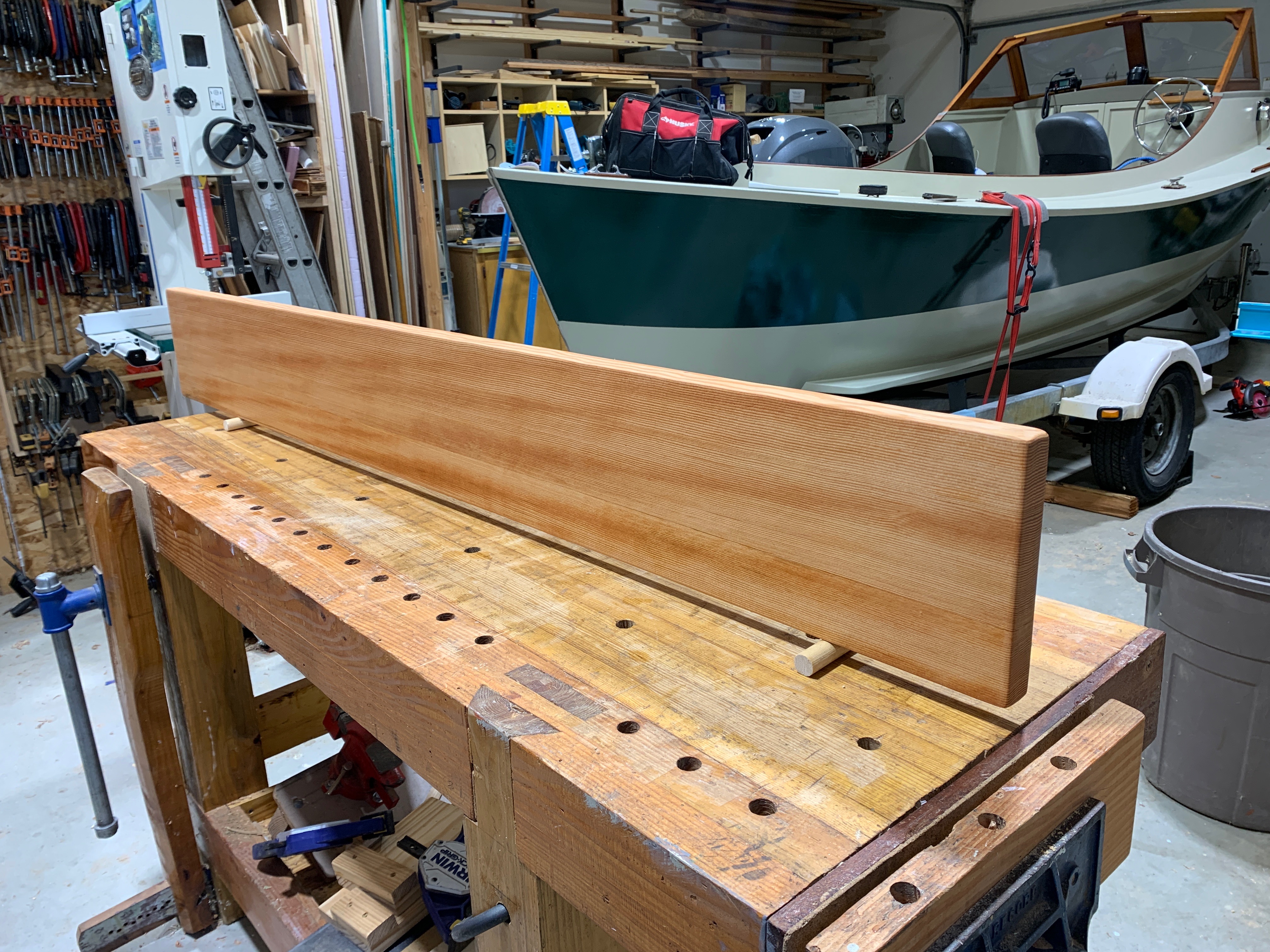
I've yet again found that once you wrap up a multi-year boat-building project, you start nervously looking around for new projects.
We don't have a fireplace in our house here in Anacortes, but I've been informed that we're sorely lacking a mantel for Christmas decorations. (I agree.) I dug around the shop and found several pieces of old-growth Douglas fir I'd squirreled away years ago.
It didn't take long to plane the faces, square the sides on the jointer and tablesaw, and glue up a blank wide enough to properly present a wide array of vintage holiday decorations and art. Sharp corners and edges won't hold finish, so I knocked them down with a block plane before oiling.
That's the status of the project you see in the photo, shot before work this morning. As you can tell, I'm enjoying the project.
What's the relevance to the business? Why is this in the newsletter?
A lot of my best work ideas come to me when I'm in the shop, digging in the yard, or rowing around the Salish Sea. And I'd venture that two or three really solid ideas are lurking somewhere in that piece of lumber.
MXGolden is a service offering of Clyde Golden, the member retention marketing agency for nonprofits and mission-based organizations.
Anacortes, WA

